Music Education Enhanced with Generous Instrument Donations

Three Knoxville-area middle schools will be playing in harmony, thanks to a generous donation from the Mr. Holland’s Opus Foundation and the CMA Foundation.

Bearden Middle, Gresham Middle, and Vine Middle Magnet have been gifted musical instruments valued at over $180,000, enriching the musical experiences of students and supporting the importance of incorporating music into school curriculums.

Bearden Middle School received instruments including violins, violas, cellos, and double basses, with a total donation value of $26,208. 

Orchestra director Rachel Peña expresses her gratitude, stating, “Each instrument is an opportunity for each student to work on their talent and skills. This builds up their self-esteem and what they consider possible in the future.” She continued, “Every instrument we received is a new opportunity for a student to experience how music changes our lives.”

Bearden Middle School’s instrument unveiling on Friday, April 26, with special guest Carly Pearce.

Gresham Middle School’s music program was bolstered by donations totaling $100,358, comprising a diverse array of instruments from flutes and clarinets to brass and percussion. 

“I am most excited that now all students will be able to play an instrument just for them! So many of my students were sharing an instrument with another student, and now they get to use one that is all their own,” said GMS band director Gracie Alward. “I love the culture we have established within the band program. Band is a place unlike any other in the school building, and I think they are beginning to find their place here in the band room.”

Gresham Middle School’s instrument unboxing on Tuesday, April 23.

Vine Middle Magnet School, with a donation value of $55,044, will benefit from instruments spanning woodwinds, brass, and percussion, including a concert bass drum and xylophone. 

“Vine Middle Magnet School’s band aims to teach students the confidence, discipline, and independence to reach their individual musical potential,” said band director Jessica Huffaker. “The CMA Foundation and Mr. Holland’s Opus Foundation has gifted the VMMS band with the needed resources to accommodate increased band enrollment, allowing all interested students the opportunity to pursue their instrumental music education.”

Vine Middle Magnet School’s instrument unboxing on Friday, April 19.

The impact of these donations extends far beyond the classroom. They provide opportunities for more students to participate in ensemble performances and competitions, instilling a sense of pride and accomplishment. They also ensure inclusivity by removing financial barriers that may prevent students from pursuing their musical interests.

The collaboration between The Mr. Holland’s Opus Foundation and the CMA Foundation exemplifies the power of partnerships in supporting arts education. Their commitment to providing resources and instruments to schools across the nation amplifies the vital role of music in the development of students. 

As these instruments find their home in the music rooms of Bearden, Gresham, and Vine, they represent not just material possessions, but symbols of growth, opportunity, and the transformative power of music in the lives of students. 

With every note played, they remind us of the importance of nurturing the artistic talents of the next generation.

Celebrating School Bus Drivers & Ruby Hensley

The wheels on the school buses that transport KCS students all across the county are carefully and attentively driven by dedicated school bus drivers, including long-time employee Ruby Hensley.

With over three decades of service under her belt, Ruby has become a beloved figure in the lives of countless students who have had the privilege of riding her bus since 1989.

“I love my job, and I love the kids,” Ruby remarks with a warm smile when asked about her journey as a bus driver. “I really do.”

Ruby’s love for her job shines through as she transports students of all ages, from the kindergarteners to the high schoolers. 

While she admits that the elementary kids hold a special place in her heart, Ruby cherishes each interaction with her passengers, no matter their age or grade.

Over the years, Ruby has witnessed the ebb and flow of challenges in her profession, including bus driver shortages. Despite the hurdles, Ruby and her fellow drivers rally together, ensuring that each child reaches their destination safely, even if it means putting in extra effort.

For Ruby, the true reward comes from the bonds she forms with her passengers, many of whom remember her fondly even after they’ve grown up and started families of their own. 

“It’s really nice to know that they still remember me after so many years,” Ruby said. “They’ll come up to me and say, ‘You were the best driver,’ or ‘I missed you driving my bus when you left.'”

One such memorable moment recently occurred when Gabe Scott, a student on Ruby’s bus, invited her to his kindergarten music program at East Knox County Elementary School

Gabe, knowing that Ruby would be there for him, eagerly extended the invitation, showcasing the special bond between a caring bus driver and her passenger.

The joy on Gabe’s face as he embraced Ruby after the program spoke volumes about the impact she has had on his life. 

“If I can make one kid happy in a day’s time, I’m happy,” Ruby remarks, her eyes shining with pride.

As Ruby continues her journey behind the wheel, her dedication and love for the children she transports remain unwavering. 

Whether it’s a reassuring smile, a listening ear, or a comforting presence, Ruby Hensley embodies the spirit of School Bus Driver Appreciation Day every day of the year.

Knox County Schools is grateful to Ruby Hensley and all the dedicated bus drivers like her, whose tireless efforts ensure that students arrive safely at their destinations, and whose kindness leaves a lasting impact on the hearts of those they serve.

The Vital Role of School Psychologists

Schools are full of professionals who work tirelessly to promote the success of each student. Educators, food service workers, administrative assistants, educational support personnel, and so many more. An additional–and equally essential–part of the team is the school psychologist.

Their jobs can be summarized into one, all-encompassing descriptor: collaborators.

“We work directly with students, teachers, admin, parents, or other stakeholders to identify ways we can provide additional supports for kids that need some help,” said Rachel Scott, a lead school psychologist who works at Northwest Middle, West High, Paul Kelley Volunteer Academy, and the Richard L. Bean Juvenille Detention Center. 

Scott sheds light on the multifaceted nature of her role. Direct interactions with students, consultations with educators, meetings with various stakeholders, and mentoring colleagues punctuate her routine. 

Whether conducting assessments, supporting discussions during various collaborative school-based meeting, or consulting with colleagues, every action serves a singular purpose: to nurture the academic and emotional well-being of students. 

Scott’s passion for her job shines through as she reflects on the variety and challenges it entails, emphasizing the profound impact it has on the lives of young learners.

“A large part of the job is advocating for students from a position of knowledge, and also making sure to show empathy and compassion for everyone at the table,” she said. “We’re all here for the same reason: to help students access and achieve academic success.”

Brittany Williams Jaynes, another dedicated school psychologist at Karns Preschool, Fair Garden Family Center, Karns Elementary, and Mill Creek Elementary, echoes Scott’s sentiments, highlighting the collaborative nature of their work. 

In her role, Williams Jaynes navigates a spectrum of responsibilities, from conducting evaluations to spearheading initiatives aimed at supporting students’ behavioral and mental health.

“It’s a great job because no two days are the same,” Williams Jaynes said. “And it’s so neat to see the students that maybe needed extra academic or social support and just how much they’ve grown by the time they head off to middle school.”

Beyond evaluations and consultations, school psychologists like Williams Jaynes embrace innovative approaches to student support. 

In collaboration with a Karns Elementary counselor, Williams Jaynes hosts the “Lunch Bunch,” a weekly social group for students on the autism spectrum.

These initiatives not only nurture students’ well-being but also create a sense of belonging and inclusivity within the school community.

“We invite peer models to eat with us and the students, and there were some friendships that grew for kids that struggled in that area,”  Williams Jaynes said.

Scott and Williams Jaynes’ narratives draw attention to the profound impact of school psychologists on student success and well-being. 

As advocates, assessors, and allies, these professionals play a pivotal role in creating nurturing environments where every student can thrive. 

Bridging the Gap: Virtual School Students Now Have a Shot at Sports

Students choose to attend the Knox County Virtual School for all sorts of reasons: a flexible school schedule, medical reasons or special needs accommodations, or a different learning environment.

The Virtual School gave students a space to learn from home while still offering extracurriculars, clubs, and in-person events for students to build a community and socialize with others. However, up until November 2023, Virtual School scholars were unable to participate in school-based athletics.

In a move to increase the inclusivity and opportunities for all students, Virtual School Principal Jennifer Garrett and KCS Athletics Specialist Bryan Brown spearheaded work allowing students to participate in sports at their base schools. 

This initiative, born out of a dedication to equity and recognizing the diverse needs of students, marks a significant step forward in breaking down barriers that previously hindered Virtual School students from engaging in extracurricular activities.

Garrett, speaking passionately about the decision, emphasized the fundamental principle of equal opportunity. 

“We had a lot of students that wanted to come to us but still wanted to play sports, and that was kind of an inhibitor for them,” she said. “Students want to be able to do everything and be included in everything, so I’m sure that they are just absolutely thrilled.”

The sentiment echoes the belief that regardless of where a student attends school, they should have access to the same opportunities for personal growth and socialization.

One poignant example illustrates the profound impact of this initiative. Garrett shared the story of a student who chose Virtual School to care for a grandparent but harbored a desire to play football. Through this work, he now has the opportunity to pursue his passion while fulfilling responsibilities at home—a testament to the transformative power of sports in the lives of young individuals.

Brown elaborated on the journey to make this all possible, and highlighted the hurdles that Virtual School students still have to navigate to join the sports programs at their base schools. 

“We applied for the Virtual School to become members of TSSAA. Once they were a member, we had two choices. They could have their own sports teams at Virtual School or get to have them play at their base schools,” he said. “So we decided to go the route of them playing at their base schools, and now these student-athletes have the opportunity to try out.”

TSSAA transfer rules still apply for any student wishing to try out for a sport at their base school, as a move to the Virtual School is considered a transfer, and the KCS Athletic department is ready to help families navigate eligibility rules.  

Looking ahead, the impact of this initiative extends beyond the realm of sports. It fosters a sense of belonging and community for these students, bridging the gap between virtual and traditional schooling experiences. 

As Garrett noted, the increased social events and engagement initiatives have led to a resurgence in interest in virtual schooling, further solidifying its place as a viable educational option for students with diverse needs and circumstances.

Educational Triumphs at Home: Transforming Learning & Embracing Challenges with KCS Homebound

Orin Heatherly is part of the Knox County Schools family, but his day may look a little different compared to his peers. 

As a Homebound student, Heatherly receives instruction from his dedicated teacher, Donna Klarich, at home.

“Working with Orin has been a deeply rewarding journey that goes beyond traditional education,” Klarich said. “It’s about embracing unique challenges and joys, fostering academic growth, and celebrating personal achievements–fulfilling my role as a dedicated educator and member of their family.”

The KCS Homebound team supports students who, due to medical or other reasons, cannot attend their base school. They stand out as a beacon of consistency for these students and their families.

Support is provided virtually or in person at home or even in the hospital, and the time spent with the Homebound teacher is sometimes the only normal part of their week. 

“Homebound has helped him in so many ways,” said Heatherly’s mom, Amy. “He is more aware of how to perform daily activities, and it has helped me to learn how to teach him effectively since I can participate in his education.”

And then there’s Celeste Cristelous, a Homebound teacher with almost 20 years of experience, specializing in working with students diagnosed with cancer. 

“We step into the lives of our students during some of their roughest times, making their days brighter and meeting their greatest needs, whether educational or emotional,” she shares.

While students are going through different stages of their treatment, their educators also adjust their style of teaching. Cristelous said that “what works after surgery does not work during chemotherapy, and what works during chemotherapy does not work during radiation.”

But what does Homebound instruction look like in practice?

Think individualized learning plans tailored to each student’s health condition, learning style, and academic requirements. Imagine flexibility in scheduling that accommodates varied rest periods or medical treatments. Envision qualified and licensed instructors dedicated to adapting to diverse learning needs and environments.

Communication is key, with Homebound teachers providing regular updates and maintaining open channels to ensure everyone involved is on the same page, and integration with the school curriculum is a priority. When the time comes, the students can experience a seamless return to school.

It’s not just about the academics; Homebound teachers recognize the social and emotional challenges students may face and offer the necessary support. Collaboration with healthcare professionals and student support services is essential for success, and building community understanding contributes to a positive, inclusive learning environment.

KCS Homebound allows education to transcend the ordinary, and every student’s journey can be a story of triumph.

To learn more about Homebound and how we can serve you and your family, please contact any members of the team.

Daphne Odom (daphne.odom@knoxschools.org)

Mendy Williams (mendy.williams@knoxschools.org)

Megan Greene (megan.greene@knoxschools.org)

Celebrating Our School Security Officers: Guardians of Safety and Community

Today, as we observe School Security Officer Appreciation Day, we pay homage to the brave men and women who stand as the first line of defense in our schools.

Among them are four remarkable individuals from different corners of our district, each with their own unique journey, challenges, and heartfelt dedication to the safety and well-being of our students.


Officer Jay Gibson, Amherst Elementary School

After working in security for years, Jay Gibson made the switch to school security to be on the same schedule as his son when he began school.

A 13-year career allowed him to experience settings from Ridgedale School to Hardin Valley Middle – where his now-senior son attended at the time – to his current posting at Amherst Elementary

“At Ridgedale, most of the kids’ paths were kind of chosen for them through their environments outside of school,” Gibson said. “I knew that if I could influence one percent of those kids, it would make all the difference.”

He remembers a special moment when he was directing traffic at HVMS during after-school pick-up when he heard a voice call, “Officer Jay! Officer Jay!” A student from Ridgedale recognized him and was excited to share his success in class and extracurriculars. 

“He’d gotten farther than I thought he would, and even though his progress wasn’t directly because of me, it was a sense of team accomplishment, and he wanted to tell me about it,” he said.

Gibson hopes more people show interest in the field and see the positive impact school security officers have on their community.


Officer Kimberly Mays, Gresham Middle School

Similarly to Officer Gibson, Kimberly Mays pursued other passions before joining the KCS School Security Division 10 years ago. 

After experiencing a high school and elementary school setting, Mays knew she found the place where she could do the most good for her community at Gresham Middle School

Mays speaks passionately about the unique qualities and unending kindness of the students at Gresham, and Principal Melissa Glover described her as whole-heartedly unselfish and loving to all people in the building.

“She is so involved, and the kids love her,” Glover said. “When kids are upset, she is the go-to person for a lot of them. I’ve never seen someone who is so involved in their school.”

Her dedication to the safety and well-being of students earned her an Officer of the Year recognition, and she even earned the Life Saver Award when she sprung into action to offer life-saving aid to a staff member last year.

She notes there are stressful moments that come with the job.

Mays said that in the last few years, more of her attention has been devoted to hostile parents.

“It is important for people to know how the escalation of parents has changed the scope of our jobs,” she said. “I want that to be the smallest part of my job and for the majority to be championing kids and promoting positivity and encouragement.”

But, she says every day is a fresh start, and remains positive and focused on her goal of creating great experiences for all students.


Officer Lee “Izzy” McDermott, West View Elementary School

At 18 years old, Lee “Izzy” McDermott knew he wanted to work in law enforcement. After security jobs at a few different companies, a friend recommended checking out an SSO position. 

Now in his second year with Knox County Schools, he’s serving in the school he once attended as a young boy.

“I know a lot of the parents here because I attended school with them,” McDermott said. “The principal, Amy Brace, was my gym teacher when I was at Sarah Moore Greene, and there are a few teachers that were here when I was in school.”

He says returning to his childhood school gives his job a bigger meaning.

“It’s a very surreal feeling,” he said. “I’ve lived in this community my whole life, and this fills me with a deeper sense of purpose serving in this school.”

His experience building relationships with the students at West View has been a highlight of his career. He plays basketball with them during recess and sets the example for good sportsmanship. He encourages them throughout the day and celebrates their successes with them. 

McDermott said when his students win in the classroom, “it’s almost like a proud dad moment.”


Officer Lisa Smith, Karns Elementary School

Lisa Smith, like so many others, came to this position from years of working in security. Now in her eighth year at Karns Elementary, she said no two days are ever the same.

“You never know what to expect when you come in each morning,” she said. “I could have a slow day or be busy for eight hours. It’s an awesome experience as a school security officer, and it’s a big responsibility.”

Principal Jamey Romig knows Smith handles all situations at Karns with the utmost care and devotion.

“On the rare occasion that something does happen at school or in the community, she takes charge of our security,” Romig said. “When a tough decision needs to be made, I trust her 100% to take care of our school.”

Smith said being in uniform and gaining the trust of students has impacted a number of individuals.

“I’ve had families say to me, ‘My child was afraid of officers before she came here, and she’s not afraid anymore.’” She continued, “It makes you feel good because you’ve positively influenced a child’s perception of people like you who care for their safety.”


As we reflect on the dedication and sacrifice of our school security officers, let us take a moment to express our gratitude for their unwavering commitment to keeping our schools safe and nurturing environments for learning and growth. Their selfless service is a testament to the power of compassion, resilience, and community spirit.

Compassionately Navigating Specialized Transport: The Role of KCS Special Education Transportation

Suzanne Clapp’s daughter, a middle school student, commutes to school just like her peers. For seven years, the Special Education Transportation Team has made sure that her unique needs don’t keep her from riding the same buses as 20,000 other students across the district. 

Clapp’s daughter is just one of the 2,000 special needs students benefiting from the work and expertise of the SPED Transportation Team. 

The Team — which includes licensed physical and occupational therapists, a Special Education Supervisor, and a Transportation Router — collaborates with nursing, speech, and behavioral specialists to facilitate the safest, most appropriate transport of special needs students to and from school every day. 

Though Clapp recognizes the Team’s obvious expertise, she values the Team’s acknowledgment of the unique challenges families face in understanding and meeting their child’s specific needs.

“As parents, we are deeply immersed in our child’s needs,” said Clapp. “Maybe they struggle–to varying degrees–with mobility, behavior, or communication. Some are non-verbal and most probably don’t understand bus safety rules. While we want our children to have the same school experience as their peers, there can be a lot of stress involved in that.”

That’s why the SPED Transportation Team encourages family involvement in the process of evaluating and arranging these services and prioritizes understanding each child’s individual safety needs.

“Wheelchairs are as unique as the children who use them and each one must be secured in a specific way to be safely transported,” Clapp explains. “Researching all those specific requirements and protocols is time consuming and, honestly, tedious, but the Transportation Team ensures every child is fitted correctly in the right chair and that every chair is secured properly.”

The team also provides Child Passenger Safety training to school-based staff throughout the district for those who either ride the bus with students or participate in the transportation process. Additionally, they complete trainings for approximately 160 special education bus drivers, 40 shuttle drivers, and contractors. 

The group also completes specific training modules. Several members hold Child Passenger Safety Certifications with Safe Travel for all Children endorsements. The endorsement is specific to the Child Passenger Safety Certification.

These hands-on training sessions include the proper use of individual safety devices, loading and unloading, the securement of wheelchairs, behavior strategies, and evacuation techniques.

Emphasizing the district’s commitment to providing every student with a quality, free, and appropriate education, KCS Director of Transportation Ryan Dillingham commends the Special Education Transportation Team for their efforts, saying: “The SPED Transportation Team works incredibly hard to make sure the complexity of a student’s needs doesn’t impact their ability to get to school in the same way as their traditionally educated peers.”

For more information on Special Education Transportation, please contact Ryan Dillingham (ryan.dillingham@knoxschools.org) or Lauren Mays (lauren.mays@knoxschools.org).

Celebrating Heroes of Education during National School Counselor Week

National School Counselor Week is a time to shine a spotlight on a group of heroes in our district – our school counselors. These dedicated professionals play a pivotal role in shaping the academic and emotional well-being of our students. 

For many counselors, the decision to enter the field is rooted in a deep-seated passion for helping young minds navigate the challenges of growing up. 

Kriston Ramsey, the counselor at Gap Creek and Fountain City Elementary, started her career as a family service worker for the Department of Children’s Services but felt her efforts were only retroactively impacting the students she worked with.

“There’s so many things we can do proactively to impact their life longer term,” she said. “I want to try to give these kids the skills they can use to avoid those situations in the future at all possible. I’ve seen the effects of negative situations, and they’re not pretty.”

Sterchi Elementary Counselor Devin Debusk

School counselors wear many hats, providing a wide range of services to address the diverse needs of their students. 

Hardin Valley Middle School counselor Rebecca Gomez said each day is different. She could walk in with a plan for a classroom lesson on diversity and identity, a group counseling session on building friendship skills, and a one-on-one with a student who is struggling, and have her entire schedule change if a child is in crisis.

She added, “There is so much collaboration and consultation behind the scenes with teachers, administrators, and parents as we may identify larger barriers to learning. Side by side, we put the pieces together to remove those for students.”

From showcasing potential career fields to boosting social-emotional skills, counselors play a crucial role in nurturing the holistic development of their students.

Despite the hardships and troubles they assist with every day in their schools, counselors love interacting with their kids.

“One of my favorite things is when the kids say silly things or tell funny stories. They sometimes forget you’re an adult and just pour their heart out to you like you’re their friend,” said the counselor at Sterchi Elementary, Devin Debusk. “Our kids are so loving and supportive of each other. They can be wild and crazy, but they just love their teachers and love to have fun.”

Hardin Valley Middle Counselor Rebecca Gomez

In their daily interactions with students, these counselors are attuned to the common issues affecting today’s youth. 

“I’m working with a lot of students on social skills and coping skills, along with working through anxieties,” Ramsey said. “We’re still seeing the effects of COVID through the behaviors of our kids and how much social learning they missed out on during that time.”

Gomez added, “I have seen an increase in mental health concerns, for sure.” She continued, “But I also see that the conversations around it are being brought into the open and a lot more people are wanting to support students in that area.”

When it comes to supporting their child outside of school, Debusk stressed the importance of community involvement in student development.

“Kids crave undivided, positive attention from adults. That’s something anyone can provide, whether you’re a family member, daycare worker, or school staff member. Just listening to them and giving them respect to share their thoughts is so important to them.”

The stories of these incredible individuals are just a glimpse into counselors’ passion and commitment to their vital roles in schools across the district. 

Gap Creek and Fountain City Elementary Schools Counselor Kriston Ramsey

As we celebrate National School Counselor Week, Knox County Schools encourages the community to take a moment to appreciate and honor these dedicated professionals who work tirelessly to shape the future of our children.

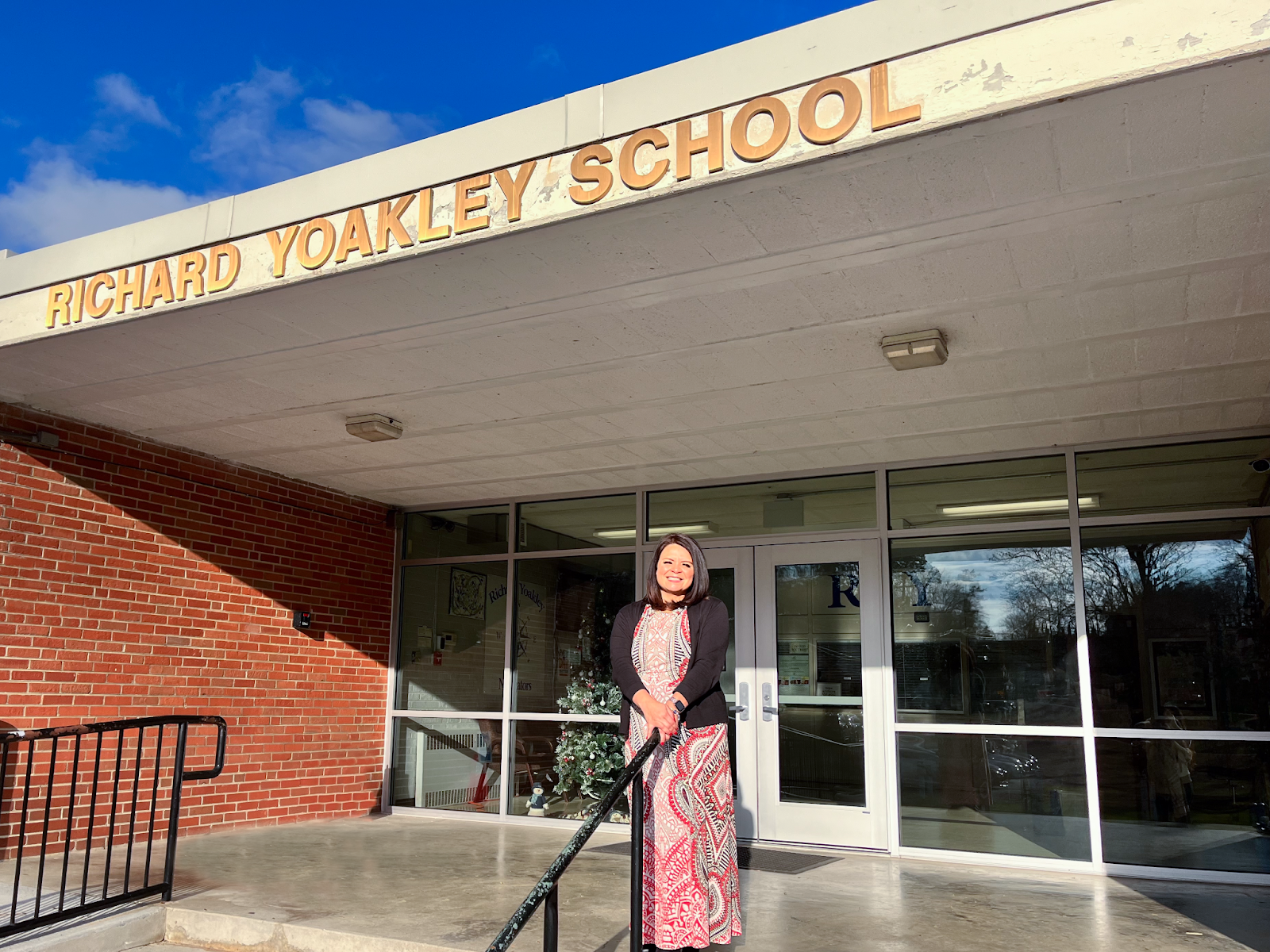
Building Connections as KCS’s First Executive Latina Principal

Just days into her new role as executive principal principal, Sofia Roth makes it a point to visit every classroom each morning.

It’s a daily routine she’s kept up no matter what school she was in. Now at Richard Yoakley, it’s helped her to quickly get to know everyone at the school during her mid-year transition from Fulton

“I’m a people person, and I like to make relationships wherever I go,” Roth said. “I want the students and teachers to see me everyday and have the opportunity to chat if they need to.”

The relationships she’s built throughout her 20+ year career in education have created a strong network that’s been helpful to her every step of the way. She still calls on the principals she’s had over time for advice and guidance. 

As the first Latina executive principal at KCS, Roth also hopes to be that role model for those teachers like her who want to explore what they think is out of reach.

“There’s a handful of Latino teachers in the county, and my door is always open for those who might want to visit and shadow me,” Roth said. “You don’t know what life as an administrator could look like until you see it for yourself.”

She also connects with a lot of the students at her schools because, like many of them, she is the product of an ELL education

“I hope some of them will see that there’s a world out there where they can do whatever they want to,” she said. “The other day I had a student ask if I thought she could do what I’m doing. I said, ‘Absolutely!’”

It’s her passion for building relationships that made her realize that she works really well with the at-risk populations in Knox County. 

“I quickly discovered that a lot of those children don’t have people they can rely on,” Roth said. For this reason, she’s trying to change the perception of her new school placement. She continued: “I think that people hear ‘Richard Yoakley,’ and they run the other way; they think it’s a bad school, and it’s not. We have really good kids that made a mistake.”

El triunfo en alfabetización de una maestra de preescolar inspira a pequeños estudiantes

Sandra Robledo proudly stands in her Pre-K classroom after school.

Todas las mañanas a las 7:15, 20 niños entre tres y cinco años de edad corren a su aula en West View Primary listos para el día que tienen por delante.

La maestra de Pre-K Sandra Robledo planea cada día y cada minuto para que ellos sepan qué se les espera cada vez que vengan a la escuela.

Después de ir a la cafetería a desayunar, los estudiantes regresan a su aula para la lectura de un cuento en voz alta y una canción infantil.

“En Pre-K, trabajamos en la conciencia fonémica y las habilidades tempranas, como reconocer letras, sus sonidos y con qué letra comienza algunas palabras. También aprenden las letras de su nombre y cómo escribirlo,” dijo. “Si se introducen estas habilidades en el Pre Kínder, estarán mejor preparados para entrar a Kínder.

El construir habilidades básicas y sólidas de alfabetización es una prioridad para las escuelas del condado de Knox, especialmente porque los estudios han demostrado que los estudiantes que llegan al tercer grado y no son lectores competentes tienen cuatro veces menos probabilidades que sus compañeros de graduarse de la escuela secundaria.

Es por eso que el Departamento de Aprendizaje y Alfabetización y el Departamento de Enseñanza Preescolar proporcionan materiales didácticos de alta calidad en todas las aulas, comenzando con Pre-K.

Robledo dijo que la mejora que ha visto en sus estudiantes “ha sido asombrosa” desde que se implementó Heggerty hace tres años.

“Son unas esponjitas,” dijo. “Es importante para mí saber que los niños no solo están recibiendo un buen cuidado sino también una enseñanza de alta calidad.”

Se le encharcan los ojos al recordar cómo “Pre-K me eligió a mí.”

Robledo regresó a Knoxville después de enseñar en una escuela internacional en Caracas, Venezuela y asistió a una feria de trabajo de KCS. Pensó que tal vez enseñaría primero o segundo grado, pero mientras iba de mesa en mesa de las diferentes escuelas locales buscando su nuevo destino, vio a Carol Idol, la que era en ese entonces la coordinadora del programa de pre kínder, llamándole la atención con una aplicación de trabajo.

“Pensé: ‘Wow, tal vez me interese hacer eso’, así que Carol me llevó a la mesa de West View Elementary. Supe entonces que ahí era donde quería enseñar,” —dijo. “¡Estoy tan feliz de estar aquí!

Este año cumple diez años en West View, pero ha sido educadora toda la vida, ya que comenzó a enseñar inglés a niños cuando solo tenía 16 años en su país de origen, Colombia.

“Tuve dificultades como estudiante, así que sentí que podía ayudar a los niños que también tenían dificultades o problemas de aprendizaje.” dijo Robledo. “Esa compasión vino de un hogar que siempre quiso ayudar.”